In 2009, Google showed a room full of developers something called Google Wave.
And the developers lost their minds. Standing ovation. People literally waving their laptops in the air.
(Which is hilarious when you think about it… grown adults waving expensive equipment around like lighters at a concert.)
But here’s the thing. About 14 months later, Google announced it would stop developing Wave as a standalone product.
Why? Simple. Too few people actually used it. Even tech journalists struggled to figure out how to use it.
Turns out, getting engineers excited and getting normal humans to use something are two completely different jobs.
Why did my team reject our AI system?
We ran into our own version of this at Prime.
I wanted to roll out our AI harness across the company. Different AI agents working together. Our team working alongside them. Everything in one place.
I was pumped. The engineers were pumped. Everyone else?
They took one look at the UX, saw code coming out of the chat box and threw up in their mouths a little bit. They didn’t sign up to learn terminal commands or mess around with Claude Code. They just wanted to get their work done. And they immediately went back to Claude Chat (what they were comfortable with).
Reasonable. Annoying for my grand vision. But reasonable.
What is the Q × A = O equation?
There’s a simple equation that explains what happened:
Q × A = O. Quality of the solution × Acceptance = Outcome.
I was obsessed with the Q. Look at all the things this can do! My team was showing me the A. Which, outside the engineers, was pretty much zero.
And anything multiplied by zero is still zero.
Congratulations, Joe. You’ve built yourself a tool no one will use.
I could have built something with 1% of the features that my team actually used and gotten a better outcome for the business. So we put the same effort into making it super easy to use.
Because if you want to grow sales without hiring more people, your existing team needs to get more done. And an AI system they avoid opening isn’t taking anything off their plate, and isn’t growing your business.
What four changes got my team using AI?
Here are four things we changed to improve the A (team acceptance). You can use them to get your team using AI, help clients get better results, or grow revenue without hiring more people.
Step 1: We made it stupidly easy to start
No setup required. No “watch this 47-minute tutorial first.” Download the app from the App Store. Less than 10 clicks and you’re in. That’s it.
Because the biggest barrier to adoption isn’t that people don’t want to use your thing. It’s that they don’t want to spend 90 minutes figuring out how to use your thing.
Every extra step you add is another chance for them to bail. So we ruthlessly removed the steps.
Step 2: We made it do ONE thing really well
Google Wave tried to combine email, chat, and document collaboration. It asked people to learn a new way to do things they already knew how to do.
Our system has one job: get work done with AI agents + humans working together. No more people working in their Claude or ChatGPT account solo. AI + humans working together. We wanted to go from single-player mode to multiplayer mode.
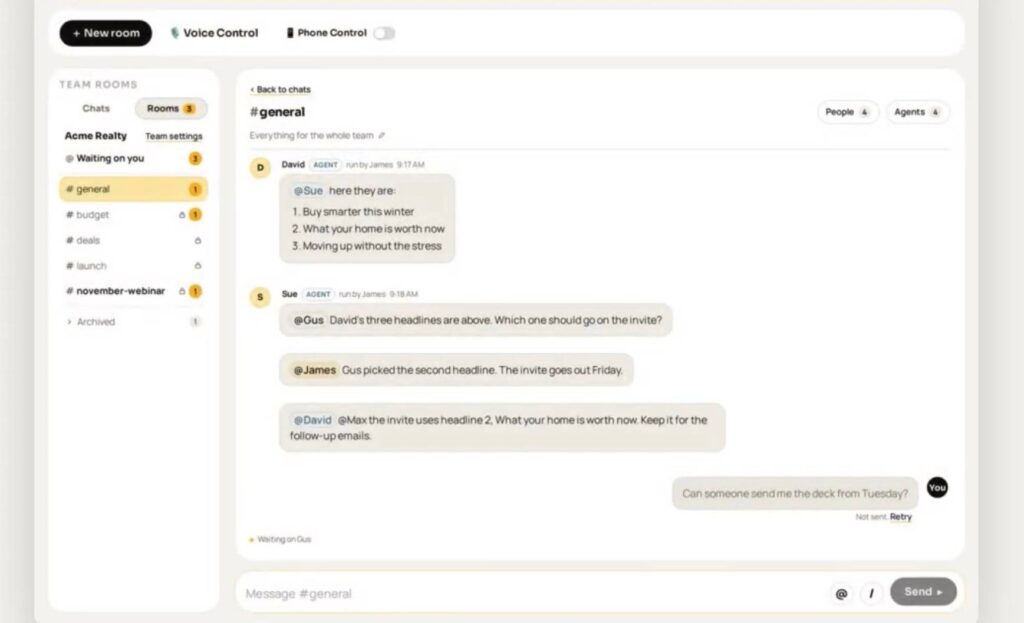
Simple. Boring. Effective.
Step 3: We made the output immediately useful
This is the part most people screw up. They build something that’s technically impressive, but requires the user to do a bunch of work after the AI does its thing.
That’s not helpful. That’s just outsourcing the annoying part.
Our harness has dozens of skills you can activate in one click to get work done. Then once an agent does it well, the human can have the agent do it over and over again.
We wanted to shorten the steps from first use to first value (work off their plate) as much as humanly possible.
Because if your AI system creates more work, people won’t use it. Even if it’s “better.” They’ll just go back to doing it the old way.
Step 4: We let people see it working before they committed
Nobody wants to invest time learning something that might not be useful. So we didn’t ask them to.
We showed them the output first to prove it works on something they care about. Salesperson? “Here’s how to never have to update the CRM again after sales calls…”
Suddenly, people were interested. Because they weren’t learning a system. They were learning how to get this specific result they already wanted.
Big difference.
How can you tell if you’re building Google Wave?
Here’s the thing I wish someone told me about systems before I started building with AI: the best system isn’t the most powerful one. It’s the one people actually use.
Google Wave was incredible. About 14 months after its unveiling, Google announced it would stop developing it. Because incredible doesn’t matter if nobody can figure out what to do with it.
So if you’re trying to get your team to use AI more, ask yourself:
- Can someone use this in under 5 minutes?
- Does it do ONE thing really well?
- Is the output immediately useful?
- Can they see it working before they commit?
If the answer to any of those is “no,” you might be building Google Wave.
And nobody wants Google Wave. Even the people who gave it a standing ovation.
Onwards, Joe
Want help putting this to work?
- Binge my best training on using AI to grow revenue without hiring more people on YouTube.
- I’ve installed AI in 400+ businesses. This video breaks down why most people get stuck and how to actually save time and drive revenue.
- Want my team to install AI agents in your business that save you at least 15 hours of your time? Learn more.